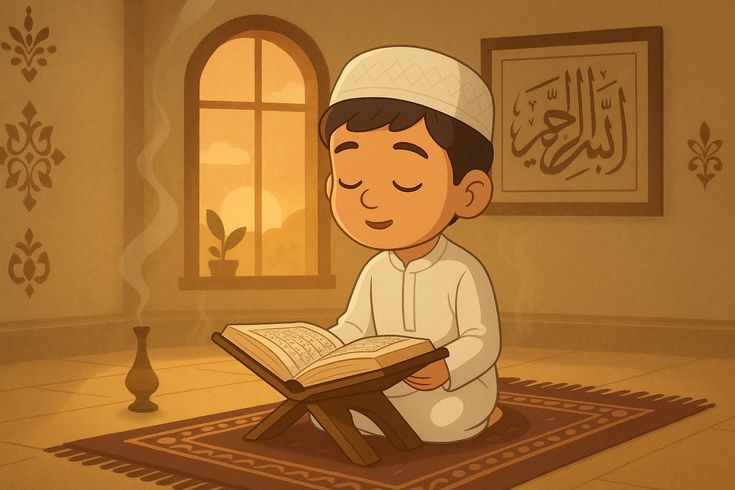
Friday is supposed to feel different. It is the best day of the week in Islam — the day Adam (AS) was created, the day he entered Jannah, and the day Qiyamah will occur. There is an hour on Friday when every dua is answered.
And yet, for many of us, Friday feels like just another day. But there is one habit that can completely transform your Fridays — and protect you for the entire week ahead.
Why This Surah Was Revealed — The Three Questions
The story of why Surah Al-Kahf exists is itself remarkable. The Quraysh of Makkah, searching for a way to discredit the Prophet ﷺ, sent two men to the Jewish rabbis of Madinah. They asked the rabbis: how can we test whether this man is truly a prophet? The rabbis gave them three questions to ask him: ask him about the young men who disappeared in an ancient time, ask him about a traveller who reached the east and the west of the earth, and ask him about the soul.
The answer came as Surah Al-Kahf. The young men were the People of the Cave. The traveller was Dhul-Qarnayn. The question about the soul was answered separately. Allah did not just answer the questions — He revealed an entire surah that would become a weekly shield for every believer until the Day of Judgment. A surah designed to answer a trap became the most widely read chapter on the most blessed day of the week.
The Light — Three Hadith, Each Adding More
The Prophet ﷺ made a specific promise about Surah Al-Kahf and Friday:
"Whoever reads Surah Al-Kahf on Friday, a light will shine for him from one Friday to the next." — (Al-Hakim, Bayhaqi)
A second narration adds a remarkable detail: "Whoever reads Surah Al-Kahf on the night of Jumu'ah, a light will stretch between him and the Ka'bah." — (Abu Sa'id al-Khudri, Darimi — authenticated by Al-Albani). Not just light for a week — a light that extends all the way to the Ka'bah.
And a third from Ibn Umar (RA): "Whoever reads Surah Al-Kahf on Friday, a light will shine from beneath his feet to the clouds of the sky, which will shine for him on the Day of Resurrection, and he will be forgiven his sins between the two Fridays." Together: noor for the week, noor reaching to Makkah, noor on the Day of Resurrection, and forgiveness of sins between Fridays. All from one surah, on one day, every week.
Why This Surah — The Four Trials and the Dajjal Connection
Surah Al-Kahf contains four stories. The scholars say this is not coincidence — each story addresses a specific trial that believers face in this world. And the Dajjal, the greatest fitna that will ever appear, will come using all four trials simultaneously. Reading Surah Al-Kahf every Friday is a weekly training session against each one.
Trial 1: The Fitna of Religion — People of the Cave
A group of young men in a corrupt society refused to abandon their faith. They fled to a cave and Allah protected them for 309 years. The lesson: when the world pressures you to give up your deen — your prayer, your values, your identity as a Muslim — stay firm. The Dajjal will demand people abandon their faith or face persecution. This story prepares you for exactly that choice.
Trial 2: The Fitna of Wealth — The Two Gardens
A man had two magnificent gardens and became arrogant, forgetting that everything he owned was a gift from Allah. His gardens were destroyed. The lesson: wealth is a test, not a proof of worth. The believing friend told him: "Why did you not say, as you entered your garden: MashaAllah la quwwata illa billah — this is the will of Allah; there is no power except with Allah." (18:39). The Dajjal will offer material abundance to his followers and deprive those who refuse. This story teaches you that abundance from a false source is worthless.
Trial 3: The Fitna of Knowledge — Musa and Khidr
Even Prophet Musa (AS) — one of the greatest prophets — had to be reminded that there is always someone who knows more. Khidr did things that seemed wrong to Musa until the wisdom was revealed. The lesson: human knowledge is always limited. Never let learning make you arrogant, and never be deceived by what appears certain. The Dajjal will claim miraculous knowledge and perform apparent wonders. This story trains you not to be fooled by surface appearances.
Trial 4: The Fitna of Power — Dhul-Qarnayn
A powerful king was given authority over the entire earth. Instead of using it for personal gain, he used it for justice and to protect the weak. The lesson: authority is a trust from Allah. The Dajjal will claim divine power and dominion over the earth. Dhul-Qarnayn's example shows what legitimate power looks like in contrast — he attributed everything to Allah and built for others, not himself.
How to Make It a Habit — A Practical System
The window for Surah Al-Kahf is from Maghrib Thursday to Maghrib Friday. If reading 110 verses at once feels difficult, the scholars suggest a practical division: 40 verses on Thursday night, 40 after Fajr Friday, and 30 before the Jumu'ah khutbah. In a month at this pace, the stories become familiar enough to reflect on while reading.
If you are still building the habit: start with the first ten verses. The Prophet ﷺ said specifically: "Whoever memorizes the first ten verses of Surah Al-Kahf will be protected from the Dajjal." — (Sahih Muslim). Ten verses is an accessible floor — five minutes, memorizable within a few Fridays, and carrying its own specific promise.
Read in Arabic for the full reward mentioned in hadith. Then read a translation to let the stories settle in your heart. Over time, you will notice something: your week will feel different. Clearer. Calmer. That is the light. And it wants renewing every Friday — which is precisely why the promise runs from one Friday to the next, and no further.

Comments
Loading comments...
Leave a Comment