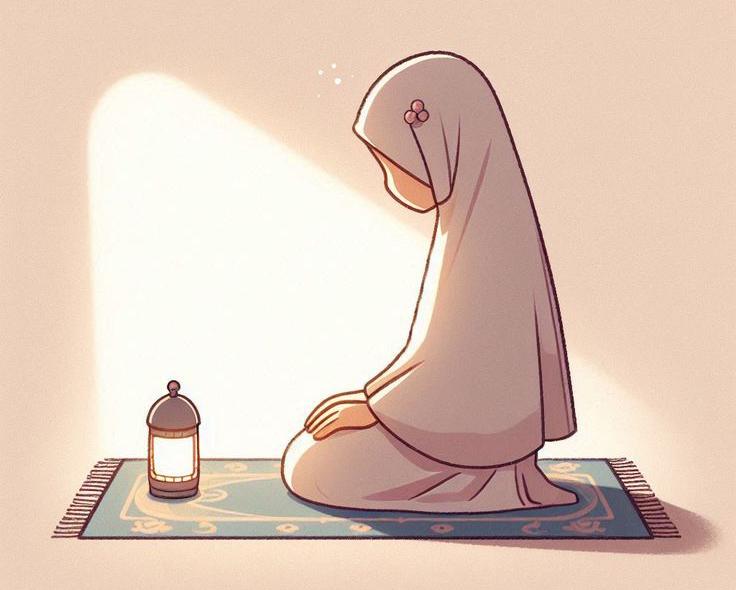
On the night of Isra wal-Mi'raj — when the Prophet Muhammad ﷺ was taken on a miraculous journey through the heavens — Allah spoke to him directly. And of everything that could have been given in that divine encounter, what was commanded was salah. Prayer. Five times a day, every day, for the rest of every Muslim's life. That is not coincidence. That is a message about what salah truly is.
What Salah Really Is
The Prophet ﷺ said: "The prayer has been established as a coolness of the eye for me." — (Nasa'i, authenticated). Qurrata a'yun — coolness of the eye, the Arabic phrase for the deepest joy and peace. Not duty. Not obligation. The thing that brings the Prophet ﷺ the most peace in the world is the very thing many of us struggle to prioritize.
Why? Because salah is a direct private audience with Allah five times a day — a direct conversation with the Creator of the universe, who is closer to you than your jugular vein: "And We are closer to him than his jugular vein." — (Surah Qaf 50:16). Every time you stand for salah, you are not performing a ritual. You are being received.
Why Five Times — And Why It Was Originally Fifty
Originally, fifty daily prayers were commanded on the night of Mi'raj. Through the Prophet ﷺ's conversations with Prophet Musa (AS), who urged him to ask for reductions based on his experience with the Children of Israel, it was reduced step by step to five. Then Allah said: "They are five prayers and they are fifty — the word is not changed with Me." — (Bukhari). Five prayers that count as fifty in reward. Allah reduced the number out of mercy — but kept the full reward. One prayer, ten times its weight.
What Happens Spiritually During Salah
When you recite Al-Fatiha in each rak'ah, Allah responds to each verse. The Prophet ﷺ transmitted a hadith qudsi in which Allah says: "I have divided the prayer between Myself and My servant into two halves, and My servant shall have what he has asked for. When the servant says 'Alhamdulillahi Rabbil Alamin,' I say: My servant has praised Me. When they say 'Ar-Rahman Ar-Raheem,' I say: My servant has glorified Me. When they say 'Iyyaka na'budu wa iyyaka nasta'in,' I say: This is between Me and My servant. When they say 'Ihdinas-Siratal Mustaqim,' I say: This is for My servant, and My servant shall have what they asked." — (Muslim)
And in Sujud — the most intimate position in all of Islam — the Prophet ﷺ said: "The closest that a servant is to his Lord is when he is in prostration — so make plentiful supplication therein." — (Muslim). The moment your forehead touches the ground, you are at your nearest point to Allah. Most people rush through it. The Prophet ﷺ lingered there.
Salah Washes Away Sins — Five Times Daily
The Prophet ﷺ asked his companions: "If there was a river at the door of any one of you, and he bathed in it five times a day, would any dirt remain on him?" They said: "No dirt would remain." He said: "That is the likeness of the five prayers, with which Allah wipes away sins." — (Bukhari)
Five prayers a day is not a burden — it is five full cleansings. Every time you pray, you leave it lighter than you entered it.
What Salah Protects You From
"Indeed, prayer prohibits immorality and wrongdoing, and the remembrance of Allah is greater." — Surah Al-Ankabut (29:45)
When you stand before Allah five times a day, conscious that He sees everything, conscious of the Day of Judgement — the desire to sin decreases naturally. The accountability becomes internalized. This is why the scholars said: if your salah is not changing your behavior outside of salah, examine whether you are truly present inside it.
The Weight of Abandoning Salah
The Prophet ﷺ said: "Between a man and shirk and kufr is the abandonment of salah." — (Muslim). This is the most serious statement about missing salah in all of hadith literature. Scholars differ on its interpretation — but all agree that it establishes salah as the line between Islam and its absence. It is not like missing any other obligation. It is the pillar on which everything else rests.
The First Question on the Day of Judgement
The Prophet ﷺ said: "The first thing the servant will be questioned about on the Day of Resurrection is his prayer. If it is sound, the rest of his deeds will be sound. And if it is corrupt, the rest of his deeds will be corrupt." — (Tabarani, authenticated). Salah is the foundation of the Day of Judgement's accounting. Everything else is built on it — or collapses without it.
How to Improve Your Salah
- Pray on time — set alarms, pray with the adhan. The Prophet ﷺ said the most beloved deed to Allah is prayer performed at its proper time — (Bukhari).
- Learn the meaning of what you say — when you know the translation of Al-Fatiha and the duas in ruku and sujud, khushu comes naturally. You cannot be present in a conversation you do not understand.
- Remove distractions — put the phone in another room. Give salah the attention you would give the most important meeting of your life — because that is exactly what

.jpg)
Comments
Loading comments...
Leave a Comment